
Comparing Different Types of Window Blinds: Pros & Cons
Window coverings play a crucial role in enhancing both the function and style of your home. Whether you want to boost energy efficiency, accentuate your unique décor, or maximize privacy, choosing the ideal window blinds can be transformative. With so many types on the market, it’s helpful to understand the pros and cons that distinguish each option.
Today’s window blinds range from classic Venetian blinds to advanced cellular shades and modern roller shades. Your final decision will affect everything from light filtration to room ambience and maintenance needs. By striking a balance between appearance and practicality, you can create interiors that are both stylish and functional for years to come.
Quality matters—so does the look and feel, especially when window blinds are a prominent part of your design. Whether you’re furnishing a new home or renewing existing rooms, blending your taste with the right performance can add value and comfort to your property.
Venetian Blinds
Venetian window blinds remain a staple in households seeking timeless appeal and versatile light control. Composed of horizontal slats (made of wood, aluminum, or vinyl) connected by strings, they tilt and lift for precise positioning.
- Pros: Delivers exceptional control over brightness and privacy. A wide range of finishes and materials allows easy matching with interiors. Ideal for offices, kitchens, and living spaces.
- Cons: Regular cleaning is required, as slats can accumulate dust. Not fully blackout-capable, and slats can occasionally tangle or warp over time.
Vertical Blinds
Distinctive for their long, vertical panels, vertical blinds are best suited for use with sliding glass doors or expansive windows. Slats rotate open or closed and glide smoothly along a track.
- Pros: Perfectly suited for wider windows and patio doors. Easy to operate, gives a sense of height, and can make a space feel taller and airier.
- Cons: Can be noisy in breezy or high-traffic zones. Less efficient at insulating than cellular or solid blinds, and may require frequent adjustment to maintain alignment.
Roller Blinds
With a minimalist design, roller window blinds elevate modern and contemporary interiors. A single piece of fabric winds around a tube, providing crisp, clutter-free lines when raised or lowered.
- Pros: Simple operation, customizable in a wide variety of colors, prints, and opacities. Can be upgraded to motorized or remote-controlled systems for added convenience.
- Cons: Light control is limited—only open, closed, or somewhere in between. May not supply 100% privacy unless blackout material is selected.
Roman Blinds
Roman window blinds offer a soft, sophisticated window solution. Constructed of folded fabric, they stack evenly to create visual interest and elegance.
- Pros: Provides a warm, luxurious look. Highly customizable with endless fabric, lining, and pattern options, making them popular for living rooms and bedrooms.
- Cons: Not appropriate for humid rooms like kitchens or bathrooms, as the fabric may mildew. Generally pricier due to craftsmanship and fabric selection.
Cellular (Honeycomb) Shades
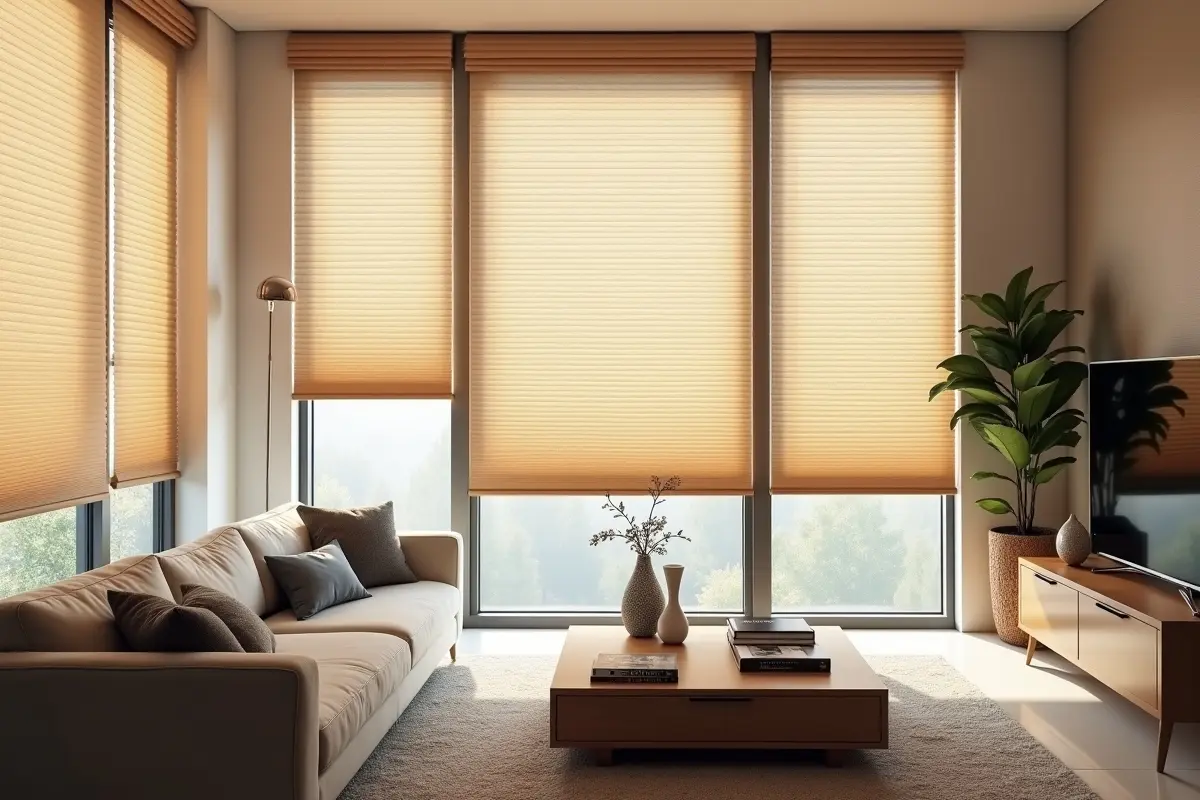
Cellular or honeycomb window blinds specialize in insulation and energy savings. Their innovative honeycomb design traps air, forming an insulating barrier between the window and the room.
- Pros: Extraordinary for energy-efficiency—can lower winter heat loss up to 40% and summer heat gain by 60%, contributing to 10–15% energy savings overall. Excellent for privacy while still allowing gentle light to filter through.
- Cons: Higher upfront investment. When fully closed, it can block outside views and reduce the amount of visible daylight.
Faux Wood Blinds
Combining the elegance of natural timber with modern resilience, window shades like faux wood blinds are crafted from composite or PVC materials and retain their appearance even in challenging environments.
- Pros: Durable, moisture-resistant, and often less expensive than genuine wood. Suitable for high-humidity environments, such as bathrooms, and available in a variety of shades.
- Cons: Tends to be heavier than real wood, which can make lifting difficult on large spans. Cannot be restained or refinished to update the look.
Mini Blinds
Mini window blinds feature narrow aluminum slats, making them a budget-friendly and lightweight solution for many rooms.
- Pros: Very economical and easy to replace. Installation is straightforward, ideal for rental properties or temporary arrangements.
- Cons: Aluminum slats are less robust and can bend easily. Offer minimal insulation and generally have a shorter lifespan.
Final Thoughts
Selecting the ideal window blinds means considering how your decision impacts light flow, privacy, insulation, and overall design. Each style brings distinct strengths and drawbacks, from the clarity of Venetians to the energy savings of cellular shades. Before purchasing, assess how each option aligns with your space, climate, and long-term goals to ensure comfort and beauty in every room of your home.